Electric Baseboard to Full HVAC System Install in Conifer
Electric baseboards and a pellet stove might get the job done - barely - but they're expensive to run and inconsistent at best. Up in the mountains, that's a real problem. This Conifer home had exactly that setup, and the homeowner was ready for something better.
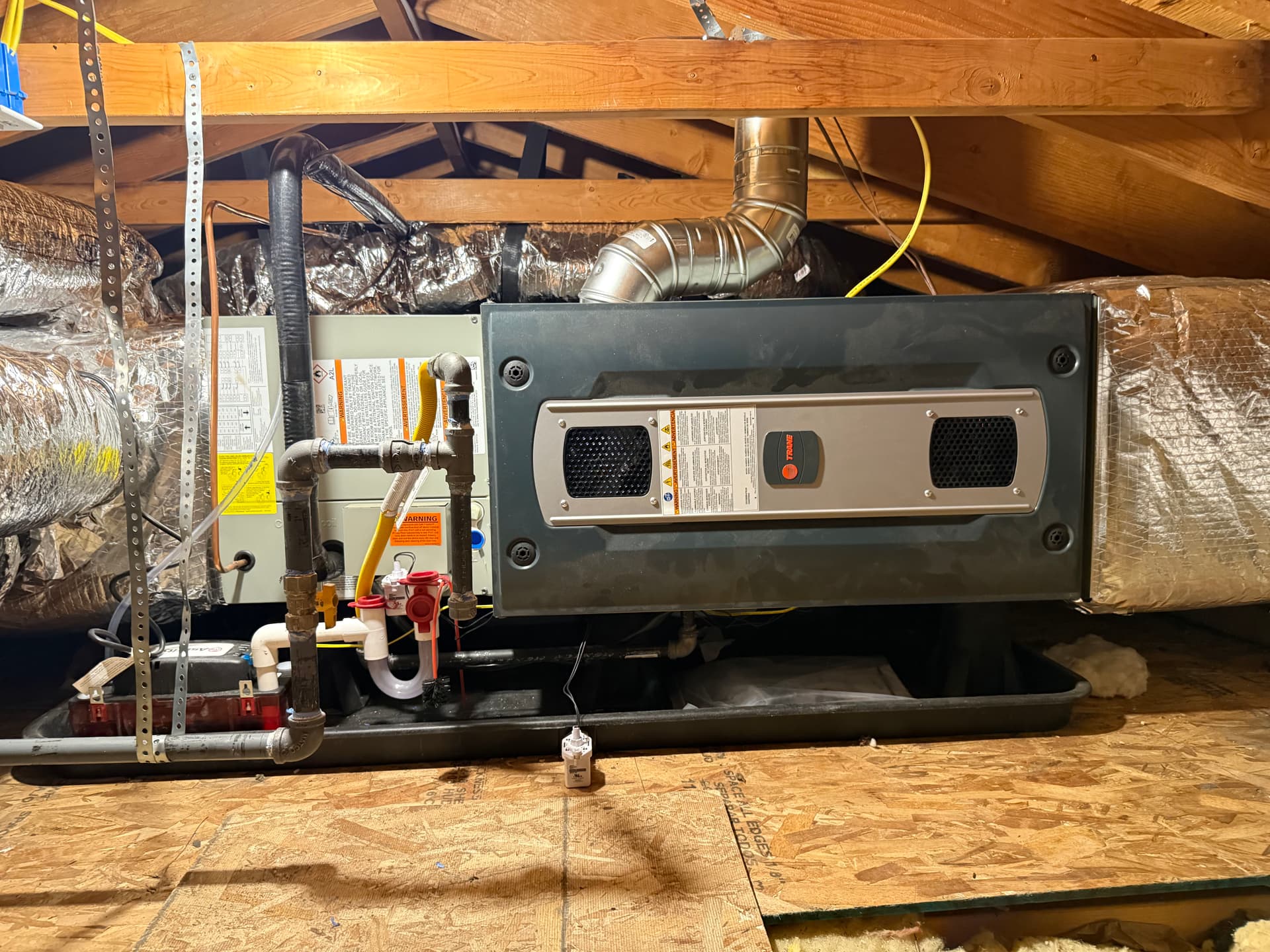
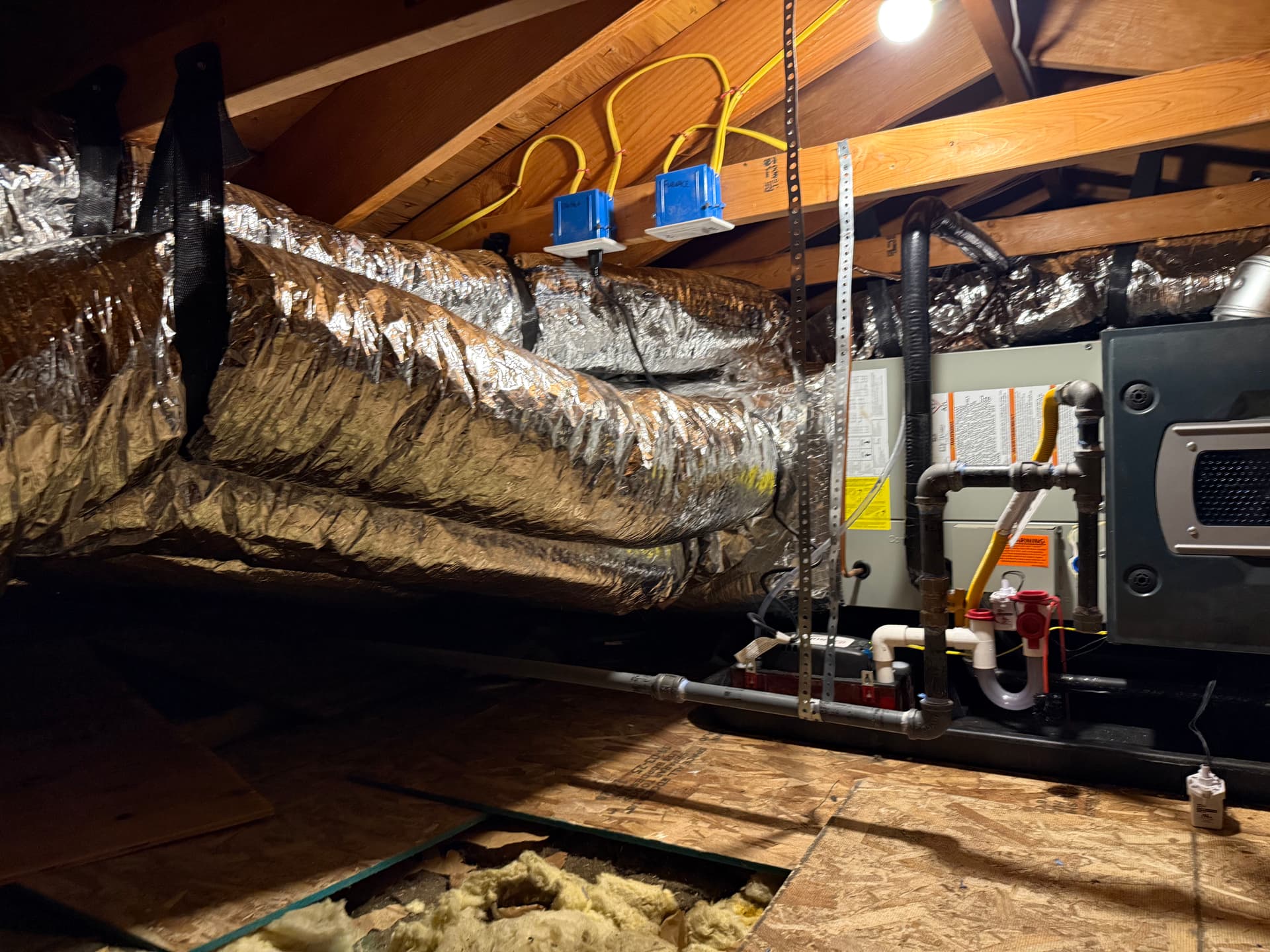
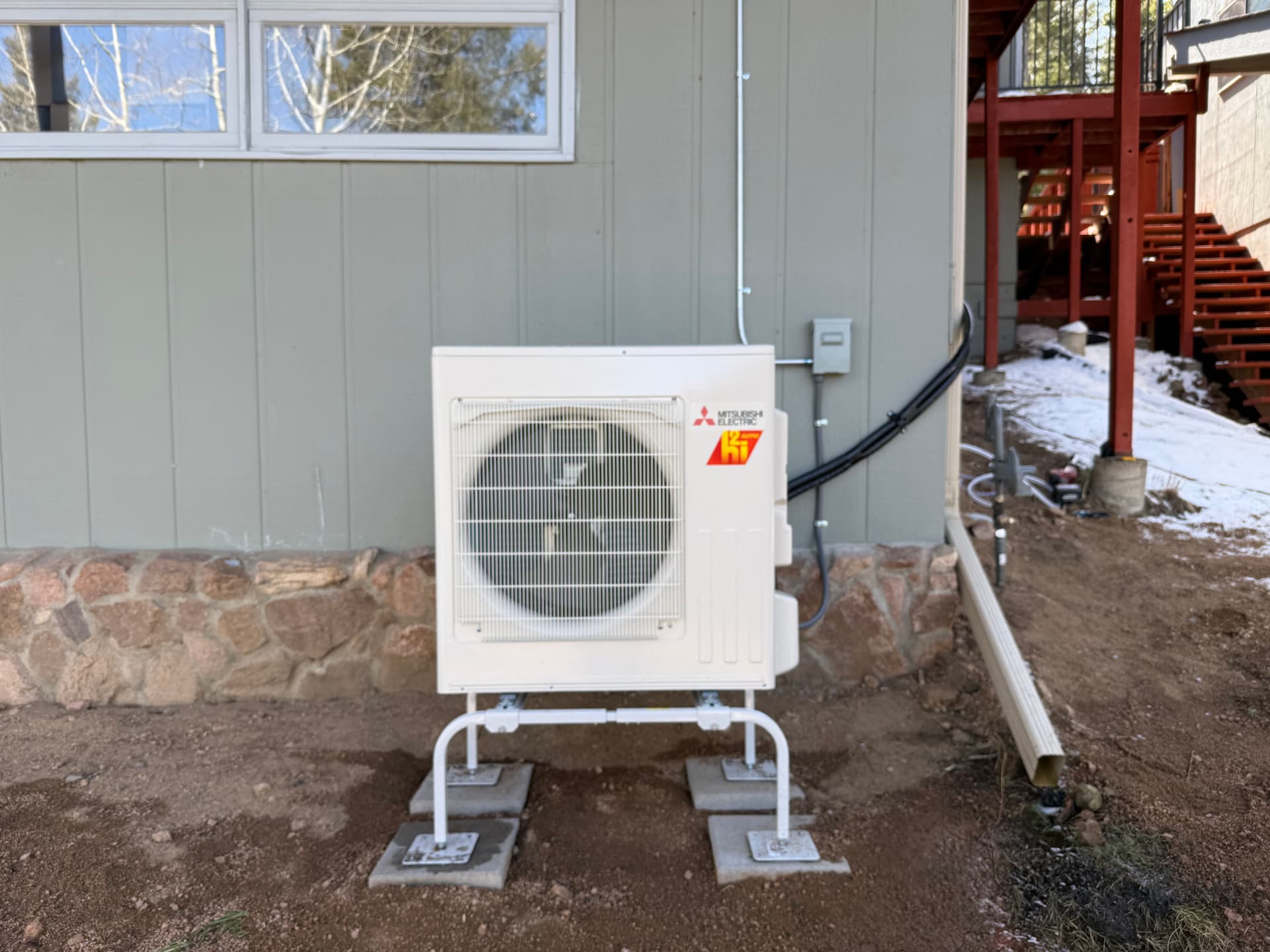
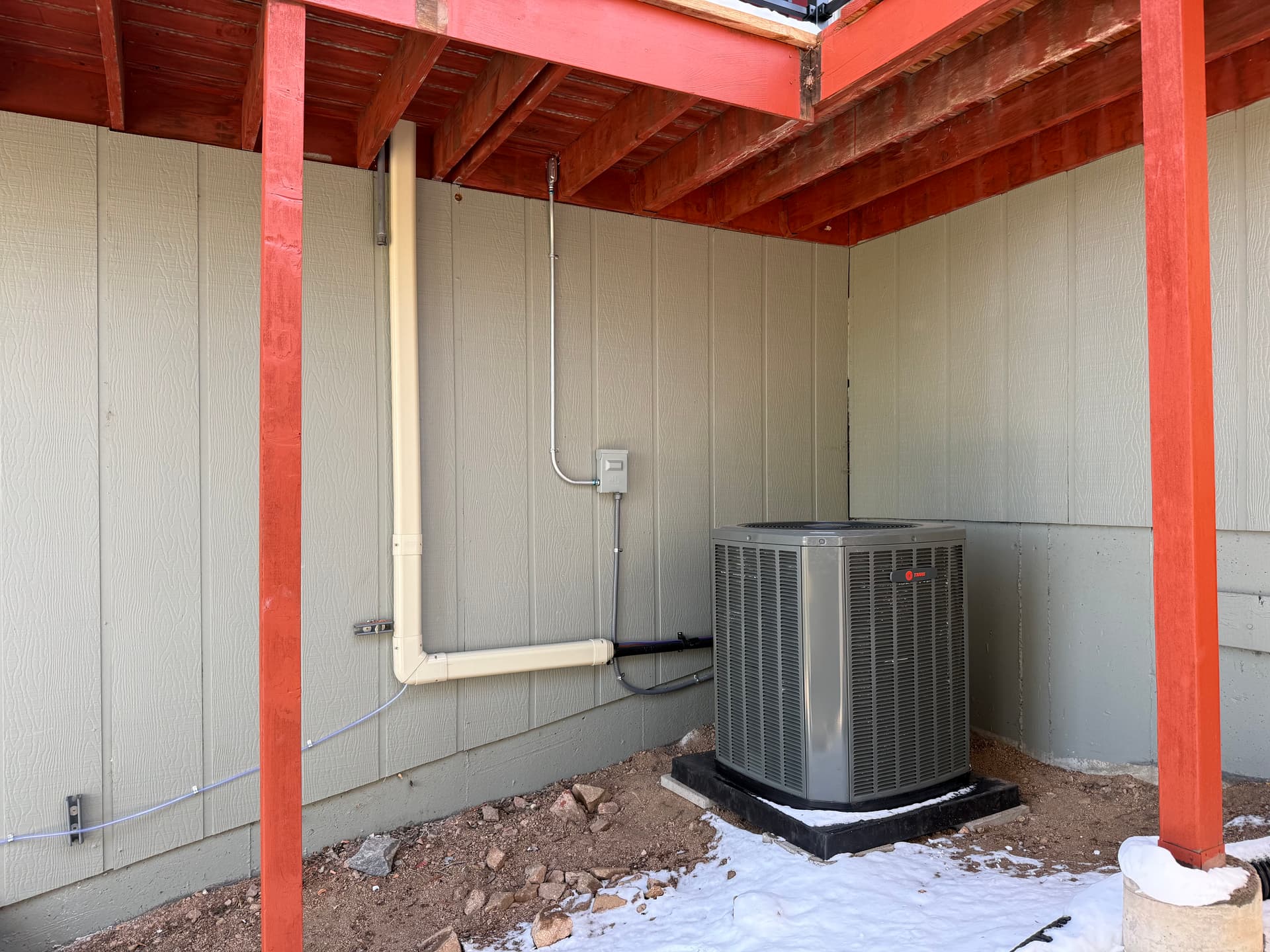
Here's what we put in: a Trane air handler tucked into the attic space with a full duct system for whole-home airflow, a Trane outdoor air conditioner unit set on a proper pad outside, and a Mitsubishi ductless mini-split to handle any zones that needed independent control. That's a complete heating and cooling solution - not a patch job.
The attic work was the heart of it. Getting the air handler, ductwork, gas line, and condensate drain all sorted in a tight attic space takes real planning. We routed the flex duct runs cleanly along the rafters with ceiling registers dropped right where they needed to be. Every connection, every line - done right the first time.
The energy savings on a setup like this are substantial. Going from resistance-based electric heat to a high-efficiency system is one of the biggest efficiency jumps a homeowner can make. Add in the cooling capability they didn't have before, and this house is now set up to handle whatever Colorado weather throws at it - summer heat or a late-season cold snap.
This is the kind of job we genuinely enjoy doing. It's not just swapping equipment - it's giving a home a proper system for the first time. If you're still relying on baseboards, space heaters, or a pellet stove to get through winter, there's a much better way to do it.